info@poolervet.com

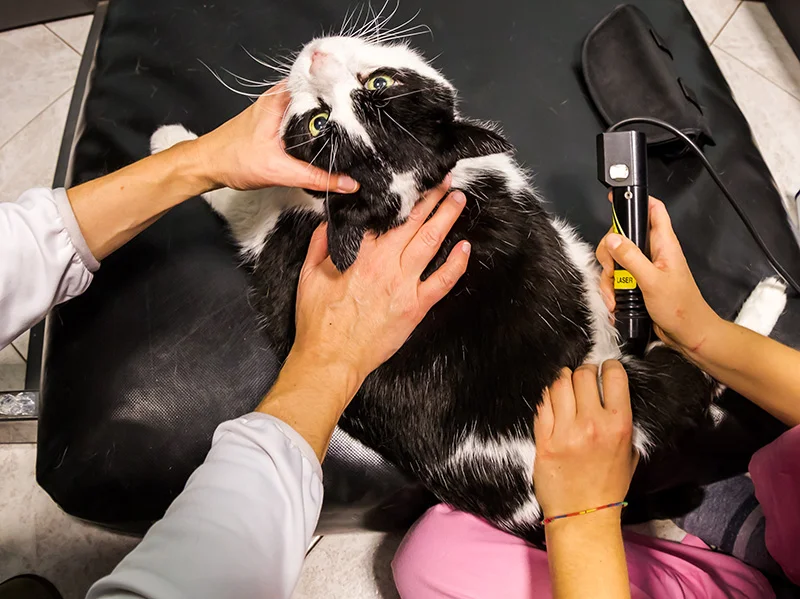
At Pooler Veterinary Hospital in Bloomingdale, GA, we proudly offer advanced laser treatments for your beloved pets. This cutting-edge technology uses deep-penetrating light to initiate photobiostimulation, promoting faster healing and relieving pain by releasing endorphins.
Laser Therapy: Quick and Effective
Laser therapy sessions typically require only 3 to 8 minutes, with noticeable improvements often visible after the first visit. The treatment is cumulative, meaning each additional session enhances your pet’s recovery. Whether it’s a chronic condition or post-surgery recovery, our laser treatments are designed to facilitate swift and significant improvements.
Additional Benefits of Laser Treatment
- Minimized Trauma: The precision of the laser ensures less tissue damage.
- Reduced Bleeding & Swelling: Many pets experience minimal swelling and bleeding post-procedure.
- Less Post-Surgical Pain: Your pet’s comfort is our priority; laser treatment often reduces post-surgical discomfort.
Treatable Conditions:
- Muscle, Ligament, and Tendon Injuries: Speeding up recovery and reducing pain.
- Post-Surgical and Soft Tissue Trauma: Enhancing healing and minimizing discomfort.
- Back Pain: Offering relief and improving mobility.
- Ear Infections: Targeting inflammation and promoting faster healing.
- Hot Spots and Open Wounds: Accelerating wound healing and reducing the risk of infection.
- Arthritis and Hip Dysplasia: Alleviating joint pain and improving overall quality of life.
- Degenerative Disc Disease: Providing non-invasive treatment to manage pain.
- Anal Gland Infections: Addressing discomfort and supporting recovery.
Senior Pet Care:
Laser therapy can also aid senior pets that may be in pain. What to look for:
- Abnormal Posture: Sitting or lying down in unusual positions.
- Circling Before Resting: Turning multiple times before lying down.
- Restlessness: Showing signs of agitation or inability to settle.
- Vocalizations: Expressing pain through whining, groaning, or other sounds.
- Mobility Issues: Limping or struggling to get up or lie down.
- Difficulty with Steps or Vehicles: Struggling to get into cars or navigate stairs.
- Neglected Grooming: An unusual lack of self-grooming.
- Tail Behavior: Unwillingness to wag the tail, indicating discomfort.
- Local Discomfort: Licking or biting a specific area.
- Change in Appetite: A noticeable lack of interest in food.
- Trembling: Unexplained shaking or tremors.
Veterinary Services
Below is a list of the most common veterinary services we offer at Pooler Veterinary Hospital. If you have any questions regarding our services, please feel free to call us.

Ready To Visit Us?
We proudly serve the pets of Pooler, Bloomingdale, Savannah, Port Wentworth, Guyton,
Chatham County, GA and the surrounding areas. At every stage of your pet’s life, we are dedicated to giving
them veterinary treatment of the highest quality.