info@poolervet.com
Dog Bloat (GDV): Signs Every Pet Owner Must Know Before It’s Too Late
Book Online
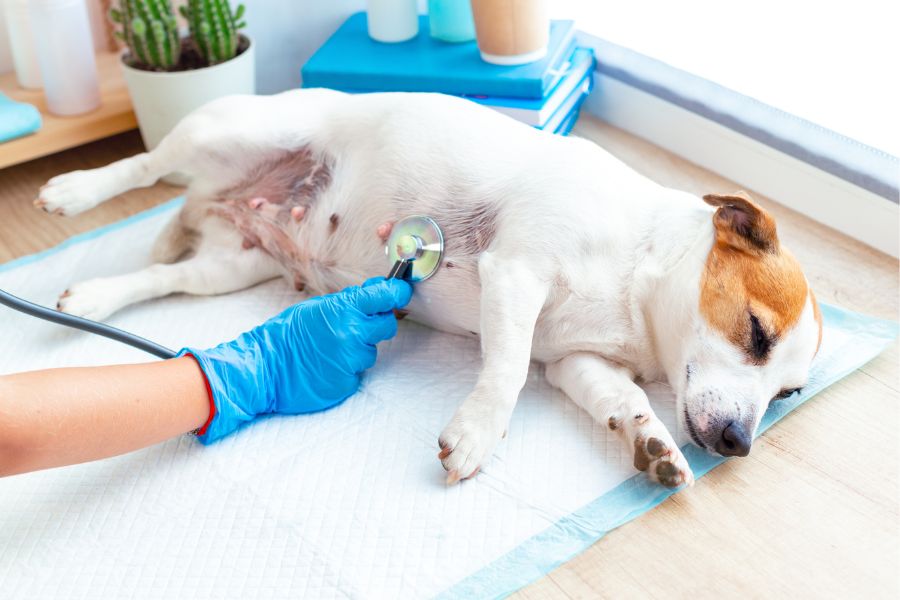
Your dog was fine an hour ago. Now his belly looks swollen, he keeps trying to vomit without bringing anything up, and he can’t seem to get comfortable. These are dog bloat GDV signs, and they demand immediate action. Gastric Dilatation-Volvulus, commonly called bloat or GDV, is one of the most life-threatening emergencies a dog can face. The stomach fills with gas, twists on itself, and cuts off blood supply to vital organs. Without emergency treatment, a dog can die within hours. This article explains exactly what bloat looks like, which dogs are most at risk, and what to do the moment you suspect it. Recognizing the warning signs early can mean the difference between life and loss. Every minute matters with GDV, and knowing what to watch for is the most important thing you can do as a pet owner.
What Is GDV and Why Is It So Dangerous?
Gastric Dilatation-Volvulus is a two-part emergency. First, the stomach expands rapidly with gas, fluid, or air. This is called gastric dilatation. Then, in the most dangerous cases, the stomach rotates or twists. That rotation is the volvulus, and it traps gas inside while cutting off blood supply to the stomach and surrounding tissue.
As pressure builds inside the abdomen, it compresses major blood vessels. Blood cannot return properly to the heart. Other organs begin to fail. Shock can set in quickly.
Research estimates that GDV affects tens of thousands of dogs each year in the United States. Survival rates drop significantly with each hour treatment is delayed. This is not a condition to “wait and see” with overnight.
Stomach bloat in dogs progresses faster than most owners expect. A dog that appears uncomfortable at dinnertime can be in full crisis by midnight. Understanding the speed of this condition is the first step in saving a life.
What Are the Signs of Dog Bloat GDV?
Dog bloat GDV signs can appear suddenly and escalate within minutes. Knowing them is essential.
- Distended or hard abdomen: The belly looks visibly swollen, especially on the left side behind the ribs. It may feel drum-tight when you press it gently.
- Unproductive retching: Your dog repeatedly tries to vomit but nothing comes up. This is one of the most telling signs of GDV and should never be ignored.
- Restlessness and inability to settle: A bloating dog is clearly uncomfortable. He may pace, lie down, get up, circle, and repeat the pattern.
- Excessive drooling: Hypersalivation often accompanies the nausea and distress of GDV.
- Pale or white gums: Pale, white, or grayish gums signal shock and indicate that blood is not circulating properly.
- Rapid or labored breathing: As abdominal pressure rises, breathing becomes shallow and fast.
- Sudden weakness or collapse: In advanced cases, dogs may become too weak to stand.
If you notice any of these signs, contact your veterinarian promptly. Do not wait for all symptoms to appear. Even one or two of these signs together warrants an emergency call.
In our experience, the dogs we see survive GDV because their owners acted within the first hour. The ones we lose are often the ones whose families waited to see if things would improve on their own.
Dog Bloat Risk Factors: Which Dogs Are Most Vulnerable?
Not every dog faces equal risk. Understanding dog bloat risk factors helps you stay appropriately vigilant for your specific pet.
Breed and body shape are among the strongest predictors. Large and giant breed dogs with deep, narrow chests are at significantly elevated risk. Great Danes, Standard Poodles, German Shepherds, Weimaraners, Irish Setters, Doberman Pinschers, and Saint Bernards are among the breeds most commonly affected.
Age plays a role as well. Dogs over seven years old face a higher risk than younger dogs. As muscles in the abdomen weaken with age, the stomach has less physical support.
Eating habits are a well-established contributing factor. Dogs who eat one large meal daily, eat very quickly, or exercise vigorously right after eating are at greater risk. A bloated stomach combined with movement creates conditions where rotation becomes more likely.
Anxiety and stress are dog bloat risk factors that owners often overlook. Dogs with a nervous temperament, dogs who board frequently, or dogs experiencing environmental changes may be more susceptible.
In our experience with Southern pet populations, the hot and humid climate in our region adds a layer of risk. Dogs in Georgia and surrounding states often gulp water rapidly after outdoor activity in summer, which can contribute to rapid stomach distension.
Having a first-degree relative who experienced GDV also raises a dog’s individual risk. If a parent or sibling had bloat, mention it to your veterinarian.
How Is GDV Diagnosed and Treated?
When a dog arrives with suspected bloat, diagnosis is fast and direct. The veterinary team will assess the dog’s gum color, heart rate, and abdominal appearance. An X-ray is typically taken to confirm stomach dilation and detect whether rotation has occurred.
Treatment follows in stages:
- Stabilization: IV fluids and medications are given immediately to address shock and pain.
- Stomach decompression: A tube is passed into the stomach to release trapped gas, or a needle is used to deflate the abdomen if the situation is difficult.
- Surgery: If the stomach has twisted, emergency surgery is required to untwist it and return it to its normal position.
- Gastropexy: During surgery, the stomach is tacked to the abdominal wall to prevent future rotation. This procedure, known as a gastropexy, can also be performed prophylactically in at-risk breeds before a GDV event ever occurs.
- Post-operative monitoring: The dog is closely watched for complications, including irregular heart rhythms, which are common after GDV surgery.
Our team has treated GDV cases where owners drove directly from the moment they noticed symptoms. Their quick decisions gave their dogs a fighting chance.
Bloat Prevention in Dogs: What You Can Do Starting Today
While GDV cannot always be prevented, bloat prevention in dogs is absolutely worth pursuing, especially for at-risk breeds.
- Feed smaller, more frequent meals. Instead of one large meal, divide daily food into two or three smaller portions.
- Slow down fast eaters. Use a slow-feeder bowl or puzzle feeder to discourage gulping.
- Limit vigorous exercise around mealtimes. Wait at least one hour after eating before allowing your dog to run, play roughly, or swim.
- Reduce stress around feeding time. Feed your dog in a calm environment away from competition with other pets.
- Discuss prophylactic gastropexy with your vet. If you have a high-risk breed, talk to your veterinarian about tacking the stomach surgically before a crisis occurs. This procedure is often done at the same time as spay or neuter surgery.
Many owners believe bloat only happens to old dogs or that it is rare. That misconception can cost precious time. GDV can strike dogs as young as two or three years old. It is not a condition that announces itself with days of warning.
Bloat prevention in dogs starts with knowing your dog’s personal risk profile. At Pooler Veterinary Hospital, we are happy to walk through your dog’s breed history, body type, and habits to help you create a prevention plan that makes sense for your family.
Conclusion
Recognizing dog bloat GDV signs quickly is one of the most critical skills a dog owner can develop. GDV moves fast, shows clear warning signals, and responds best to immediate veterinary care. If your dog has a distended belly, cannot vomit successfully, is restless, or has pale gums, do not wait. Call your veterinarian or the nearest emergency animal hospital right away. The earlier treatment begins, the better the outcome. High-risk breed owners should also ask their vet about preventive measures, including gastropexy and feeding changes, before a crisis ever occurs. Your dog is counting on you to act fast. Pooler Veterinary Hospital is here to help you protect your pet at every stage. Book an appointment today.
Frequently Asked Questions
Q: How quickly does dog bloat become life-threatening?
Ans: GDV can become fatal within two to six hours of symptom onset in severe cases. The stomach twist cuts off blood supply to organs, causing shock and tissue death rapidly. This is why immediate veterinary care is essential the moment symptoms appear.
Q: Can a dog with bloat still eat or drink normally?
Ans: A dog in the early stages of GDV may still attempt to eat or drink, but they are typically visibly uncomfortable and restless. Do not offer food or water if you suspect bloat. Get to a veterinarian immediately rather than waiting to observe feeding behavior.
Q: Is GDV the same as a dog having a gassy or upset stomach?
Ans: No. Mild gas or an upset stomach may cause temporary discomfort that resolves on its own. GDV involves the stomach physically twisting, which traps gas and cuts off circulation. The difference is severity and speed. A gassy dog may burp and recover. A GDV dog will deteriorate rapidly without surgery.
Q: What dog breeds are most at risk for GDV?
Ans: Deep-chested, large to giant breeds face the highest risk. Great Danes, Weimaraners, German Shepherds, Standard Poodles, Irish Setters, Doberman Pinschers, and Saint Bernards are among the most commonly affected. Any large dog with a narrow, deep chest should be considered at elevated risk.
Q: Can bloat come back after a dog has surgery for GDV?
Ans: If a gastropexy is performed during surgery, the stomach is tacked to the abdominal wall, which significantly reduces the chance of the stomach rotating again. Dilation can still occur without rotation, but the life-threatening twist is largely prevented. Ask your veterinarian whether gastropexy was performed and what follow-up care is recommended.
Ready To Visit Us?
We proudly serve the pets of Pooler, Bloomingdale, Savannah, Port Wentworth, Guyton,
Chatham County, GA and the surrounding areas. At every stage of your pet’s life, we are dedicated to giving
them veterinary treatment of the highest quality.